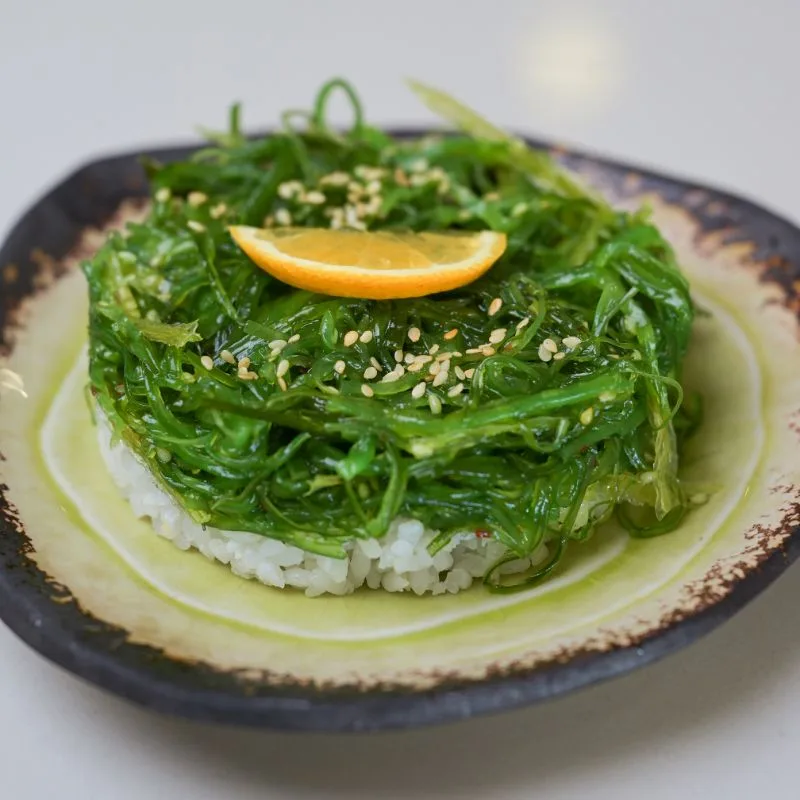
Wakame Salad
若布 · wakame
- Wakame
- Served with lemon and sesame
To grasp how old wakame is, the tax records are enough. The Taihō Code of 701, among Japan’s first written bodies of law, lists seaweed among the goods a household could render to the empire as tax. The poetry anthologies of the eighth century mention coastal people gathering wakame. This leaf has sat at the Japanese table for thirteen hundred years.
There are forests beneath the sea as well. Wakame 若布 is a brown alga that climbs meters toward the sun in cold currents; the waka 若 in its name means young, a nod to the tenderness of the fresh blade. Once harvested, the seaweed is blanched, and in that instant its color turns from brown to emerald; then it is salted or dried. It is the quiet presence at the bottom of miso soup, the same one at the edge of a rice bowl.
The salad is the youngest reading of this ancient leaf: the depth of sesame oil, the freshness of rice vinegar, sesame scattered over it like rain. The sea’s minerals, iodine and calcium, wait ready inside the blade.
A leaf once paid to emperors as tax, served today in a salad bowl. Time moves on; the sea’s generosity stays put.