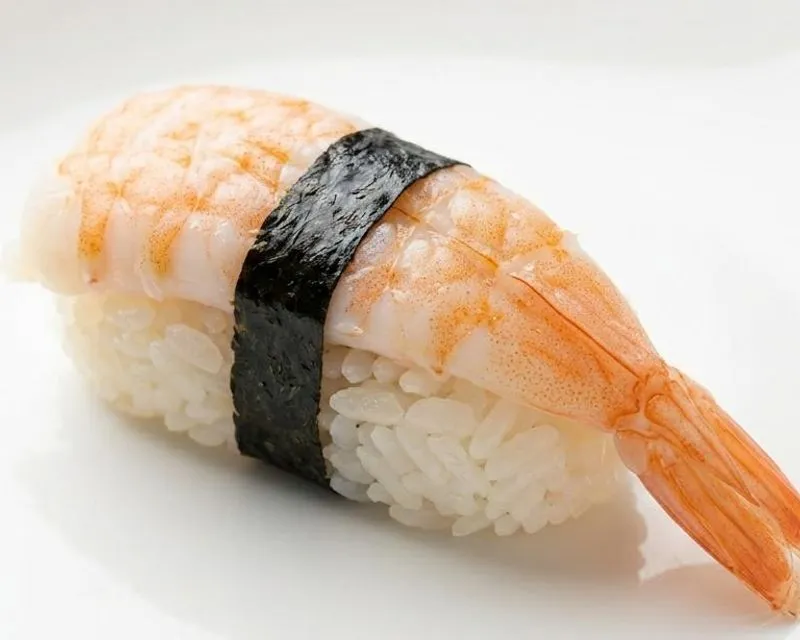
Ebi Nigiri
海老握り · ebi nigiri
The pink and white pattern of ebi nigiri is one of the counter’s handsomest sights; yet that elegance began as a necessity of the age before refrigeration. In the Edo period, keeping raw shellfish was dangerous; masters secured both safety and sweetness by poaching the shrimp lightly. Poached shrimp is for that reason one of the nigiri tradition’s oldest subjects, and the favorite of the Edo counters was the kuruma ebi 車海老.
The preparation demands an invisible precision. The shrimp is first tied straight along a slender skewer; otherwise it curls in the hot water and cannot sit on the rice. A poach measured in seconds is stopped by iced water. Then the shrimp is opened deftly from the belly; Japanese cooking calls this cut butterflying. Shell, whiskers and vein depart; what remains is sweet, springy, patterned flesh.
What was a method of preservation two centuries ago is a signature elegance today. Constraint turning into art; perhaps that is the shortest definition of craft, and ebi nigiri is its proof on a plate.